
Venture Capital Explained: A Beginner’s Guide to Early-Stage Funding with Oriel IPO
Why Venture Capital Matters and How Oriel IPO Simplifies Funding
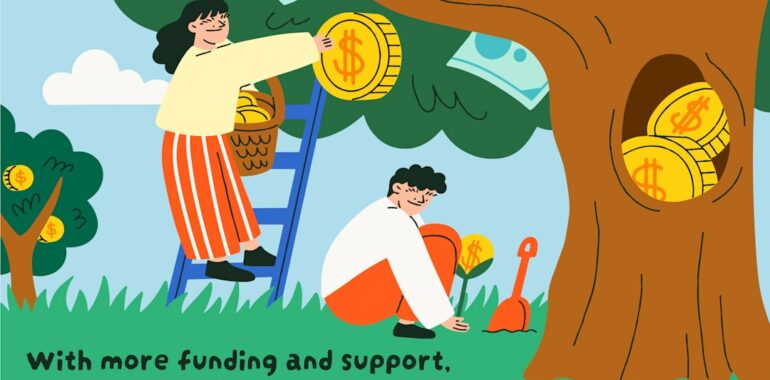
Starting a business is like trying to plant a sapling in rocky soil. You need fuel, know-how and a little push. Venture capital fills that gap. It fuels early growth when banks and loans won’t lend a hand. It brings more than money. Think of it as guidance, networks and a safety net rolled into one.
Oriel IPO steps in where complexity scares off new investors. We connect you to SEIS and EIS deals in a commission-free, transparent marketplace. No hidden fees, no jargon at every turn. Curious about how venture capital explained can work for you? Venture capital explained: Democratizing Investment at Oriel IPO
Understanding Venture Capital
What Is Venture Capital?
Venture capital is private equity set aside for startups with big ideas. Regular loans? Often off limits. Venture capitalists (VCs) swap cash for equity and a seat at the decision table. They pool money from limited partners—think pension funds, family offices, high-net-worth individuals—and hunt for businesses that might break out.
Key aspects:
– Seed and early funding rounds drive many startups forward.
– VCs expect growth in exchange for their stake.
– They often bring strategic advice, mentor founders and unlock new markets.
How Venture Capital Works
VC firms raise funds from limited partners (LPs). They then scout for companies that match their focus—be it tech, health or sustainable energy. When a startup catches a VC’s eye, a term sheet arrives with:
– Proposed investment amount
– Equity percentage
– Key conditions (milestones, board seats, follow-on rounds)
Unlike a loan, VC cash isn’t repaid month by month. Instead, VCs plan to exit via acquisitions or IPOs. They aim for a few big wins to offset the ventures that don’t pan out. Roman Health Ventures is a classic example: an $88 million Series A round in 2018 led to over $500 million by 2021, transforming telehealth for men’s care.
Stages of Venture Funding
Success often depends on timing the right round.
Pre-VC and Pre-Seed Stage
Early days are funded by founders’ savings, friends or family. You call this “bootstrapping.” It covers:
– Initial product development
– Market research
– Building a basic prototype
If you need more than spare change, you move to pre-seed. Angel investors or micro-VCs step in, often in exchange for convertible notes or preferred shares.
Seed Stage
Once your prototype shows promise, you enter seed funding (Series A). This round pays for:
– Hiring critical staff
– Marketing experiments
– Expanding operations
Here, VCs want proof of product-market fit. They look for clear signs that customers are lining up to buy.
Growth and Late Stage
Mature startups hit Series B, C and beyond. At this point:
– Revenues matter more than prototypes
– Private equity firms and hedge funds may join
– Valuations climb, risk dips
The goal? Prepare for an exit—acquisition or IPO—where VCs cash out their stakes.
Why Tap Venture Capital?
Picking VC isn’t just about money. It’s about the extras that bankers can’t offer.
-
Expansion capability
VCs share your risk when setup costs are high. -
Mentoring
They’ve seen the roller-coaster. They advise on strategy, hiring and scaling. -
Networks and connections
Need talent or another funding round? Your VC might know the right people. -
No loan repayments
No monthly instalments. If the startup fails, you don’t owe VC funds. -
Enhanced credibility
A VC’s stamp of approval can open doors in your sector.
Much of this applies when venture capital explained meets a platform that simplifies access. Midway through your journey, you might be weighing options. See how Oriel IPO can guide you with SEIS/EIS deals designed for both new and seasoned investors Discover how venture capital explained can power your startup at Oriel IPO
How Oriel IPO Bridges the Gap with SEIS and EIS
The UK’s Seed Enterprise Investment Scheme (SEIS) and Enterprise Investment Scheme (EIS) offer big tax breaks. Yet the application process can feel like decoding hieroglyphs. That’s where Oriel IPO makes a difference:
- Commission-free platform
- Curated SEIS and EIS opportunities
- Transparent deal information
- Community insights, blogs and events
We’re not FCA-regulated so you won’t get financial advice from us. Instead, we give you the tools to connect, learn and decide. Our secure marketplace lists early-stage ventures alongside details on:
– Investment thresholds
– Expected timelines
– Potential tax relief
Imagine scrolling through an easy dashboard rather than wading through PDFs. Oriel IPO offers that clarity. It democratizes early-stage investment, turning the “VC club” into an open house.
Testimonials
What Our Community Says
“I was overwhelmed by tax rules and fund structures. Oriel IPO’s SEIS/EIS marketplace cut through the noise. Now I back startups with confidence.”
— Claire R., Angel Investor
“Oriel IPO feels like a friend explaining VC in plain English. The commission-free model means my money goes where it belongs—into the startups I believe in.”
— Ahmed S., Early-Stage Investor
“Finding SEIS deals used to take weeks. With Oriel IPO’s secure marketplace, I set up my portfolio in a day. Tax relief? All spelled out clearly.”
— Fiona M., Startup Mentor
Getting Started with Oriel IPO
Ready to dive in? Here’s a quick path:
- Sign up for an Oriel IPO membership
- Explore SEIS and EIS listings
- Join community events and webinars
- Make your first commission-free investment
- Track performance in your dashboard
Venture capital doesn’t have to be a maze. With the right support, you focus on spotting winners. Oriel IPO brings that support to your fingertips. When you understand the rules, you can play the game—and win.
Whether you’re an entrepreneur seeking funds or an investor seeking early wins, keep asking the right questions: What value do I get? What risks lie ahead? And which deals fit my goals?
Start your journey with venture capital explained at Oriel IPO


